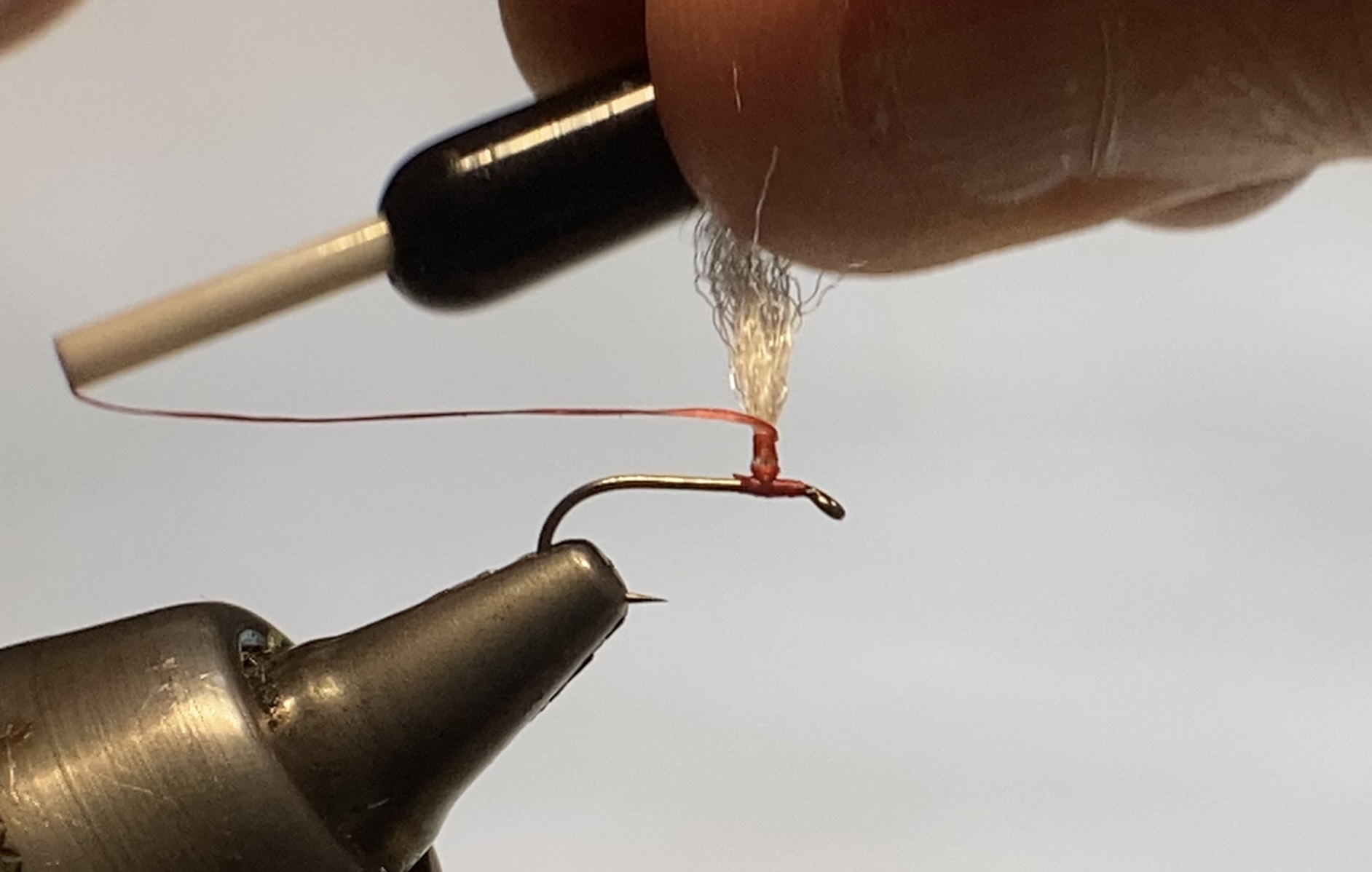
Next Branch Meeting, Tuesday 17th March 2026. Hands on fly tying – Les. Ian. Tying a wet spider pattern.
With the help of Les Lockey, we have been putting together a more focussed programme for fly tying tuition to hopefully meet the requirements of all levels from beginners and improvers to more advanced.
We will be starting this off at our next tying evening in March with two mentors covering the first basic skills session and all aspects involved with tying a wet spider pattern.
Location: Timperley Village Club, 268 Stockport Road, Timperley, WA157UT
Branch Meeting, Tuesday 17th February 2026. An evening with split bamboo rod building expert Barry Grantham
We were thrilled to have Barry Grantham join us for a demonstration on his split bamboo rod and reel making processes. Barry, who comes from Lincolnshire, is a tool maker, fly dresser, GAIA instructor and attends many of the shows around the country promoting the sport of game angling. He talked us through the process of making his split bamboo rods:
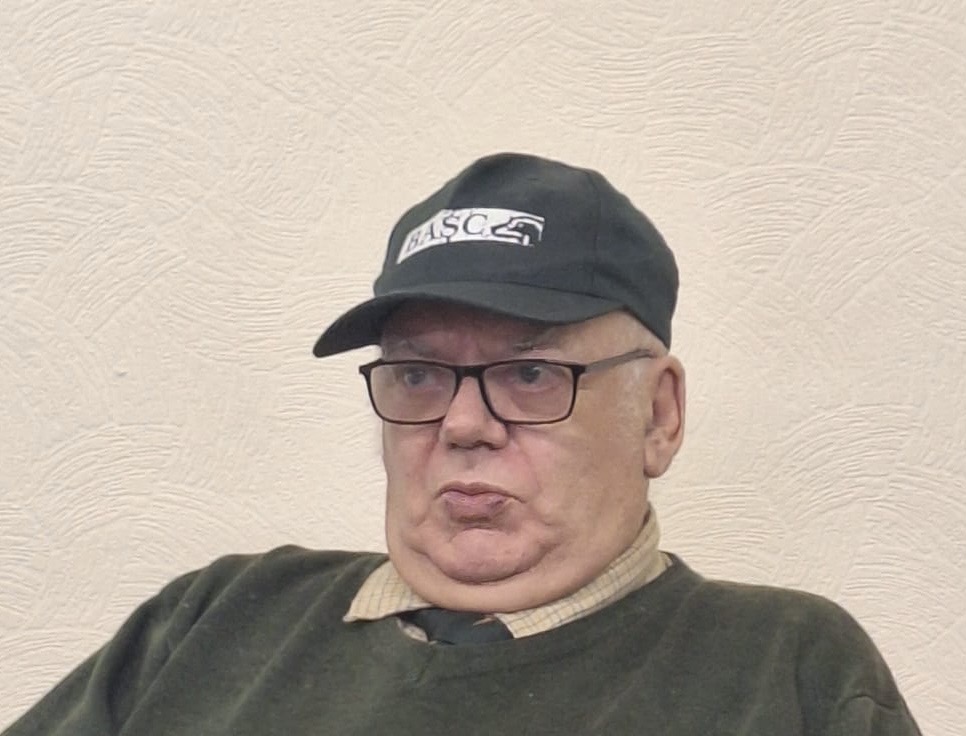
Every rod starts its life as a raw bamboo pole, called Tonkin (translating to ‘lovely bamboo’), which is taken from a region in China of the same name. As Barry commented, this is the only truly suitable bamboo for rod making. The culms (the cylindrical stem of the bamboo plant) are floated down river and are then shipped to the UK in 13 ft lengths.
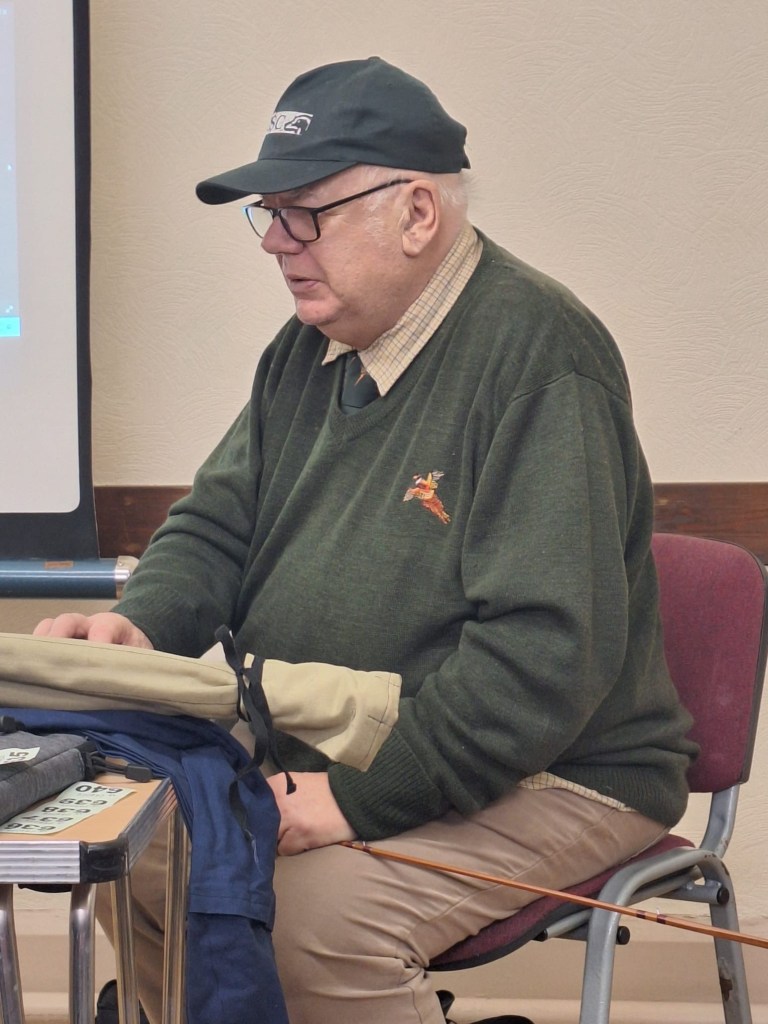
On arrival to Barry’s workshop, the dry culm is split in to two (using a bayonet!) and dried out. The bottom of the bamboo pole is used for rod butt sections and the top part for the tip section. Then the real work begins – the outer nodes are removed and the strips are prepared (a vital part of the process). The strips are cut to length and the pith is planed off the inside of each strip and then straightened. The prepared strips are then made into triangular tapered sections using either a precision milling machine, a hand milling machine or an adjustable steel former. Barry has designed his own machine for this purpose and sells these, like his rods, around the world. The strips are then prepared for the next stage which is gluing. He has found the best tape for this to be….sellotape. He uses a toothbrush to apply the glue and then completes the process by binding the strips together ensuring equal binding down the rod joint. He sands the rod and polishes it with fine wool. He then impregnates the rod using an oil varnish from the USA. Ferrules are fitted and checked for alignment whilst a cork handle is fitted using cork rings from Portugal which is then sanded down to size and shape on a high-speed lathe. Any small, porous holes are filled with a special filler. Suitable rings are wrapped to the rod using silk thread (a process often undertaken by his wife) and are then sealed with a plastic glue mixed with water. The wraps are then varnished and any logos, names or individual specifications are added to the finished rod.
Today the vast majority of Barry’s rods are split bamboo and many are sold overseas with regular orders being sent to America, Japan, Finland and Norway plus Italy and South Africa. The process takes about 32 hours on average and lasts three weeks. Rods retails for just under £1000 and are considered collectibles.
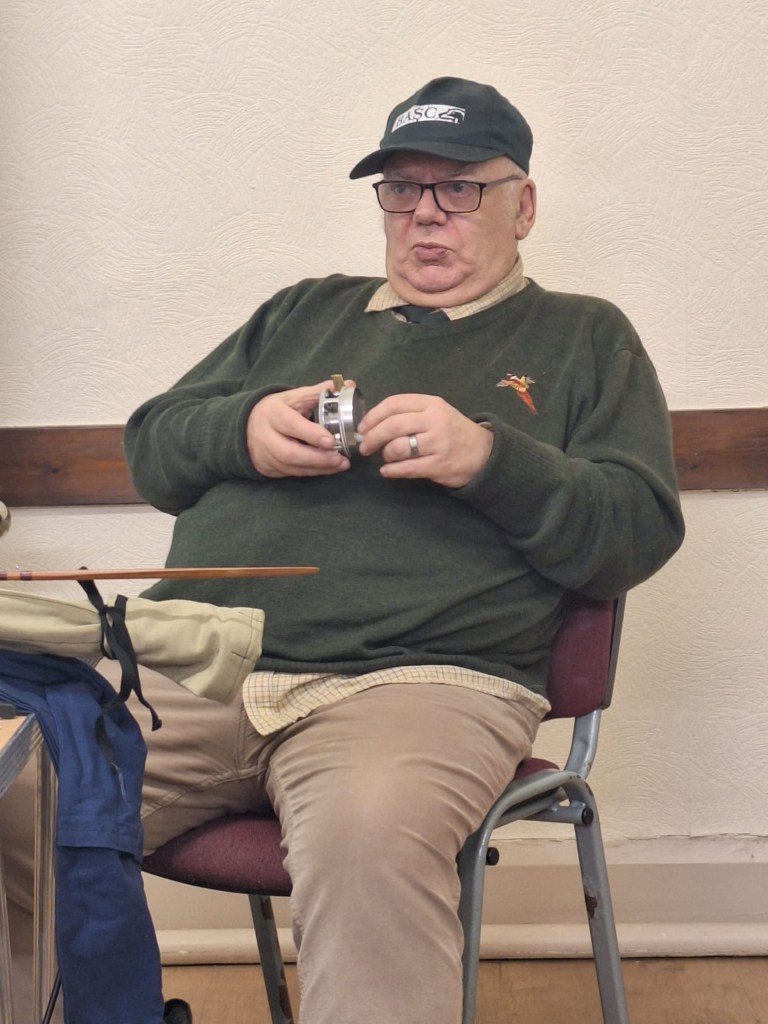
With time against us, Barry then showed some slides that detailed the process of making a reel from an aluminium block. He talked briefly about how the reel is as important as the rod in order to get a finely balanced set up and suggested using silk line to compliment the traditional handcrafted set up.
A raffle was held and whilst neither Barry’s rod nor reel were included as prizes unfortunately (!) winners were able to select from a range of fishing related items including flies tied by previous demonstrators Bob Lomax, Phillipa Hake and Carl Humphries. A great turn out for the event with 15 branch members present.
 North West Fly Dressers' Guild